FGF (fused granular fabrication, pellet extrusion): 9 models
FGF stands for fused granular fabrication, often simply called pellet extrusion. The principle is the same as filament printing: plastic is melted and laid down track by track. Instead of a strand from a spool, however, the extruder draws pellets from a hopper, melts them in a screw and pushes the melt through the nozzle. Pellets are much cheaper than filament and available in a far wider range, including recyclates and filled compounds with glass, carbon or wood fibres. Because the screw delivers large volumes, the process suits large parts, moulds and tooling, full-scale prototypes and small series in which material cost matters. The trade-off is a coarser resolution than with filament printing; functional surfaces are often machined afterwards.
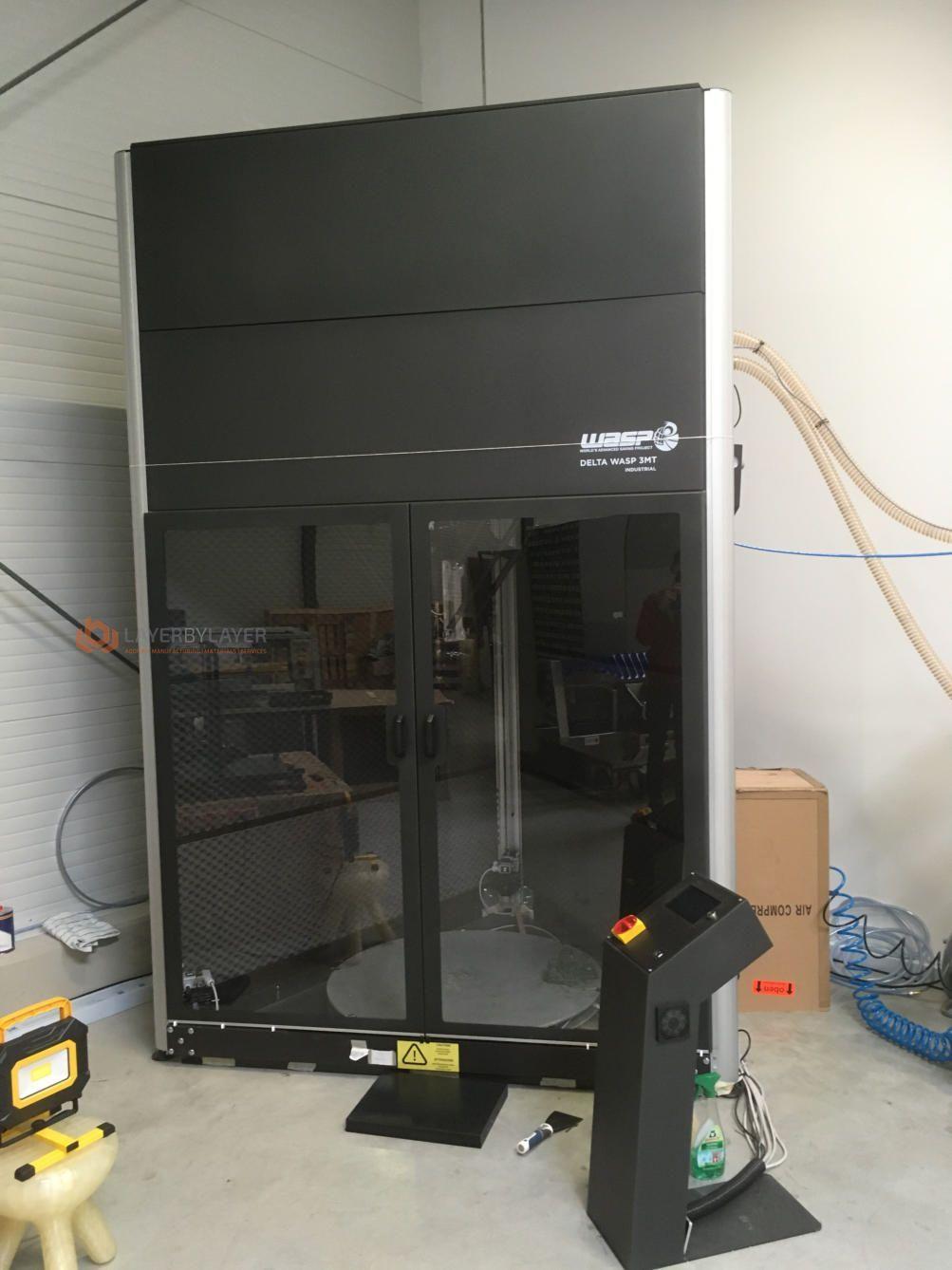
In our catalogue, FGF covers pellet printers in gantry and delta designs, from benchtop units to large systems several metres tall. Some machines can be converted between filament and pellet extruders; their model pages list both variants.
When buying used, the screw, barrel and nozzle matter most, as filled pellets wear them noticeably. Also important are the hopper and feeding system, pellet drying, heating zones and temperature control, and on large systems the frame, guides and build platform. Check which print profiles and software come with the machine, which materials have been processed so far and whether spare screws and nozzles are still available. Below you will find the technical data of every FGF system in our catalogue and which of them are currently offered used.
Currently for sale1 FGF system
Used FGF systems, plus systems with a related process from the same material group.
 20195
 20197
 202410
 20176
All manufacturer, product and material names mentioned are trademarks or registered trademarks of their respective owners and are used for descriptive purposes only.